



Dr. Marija Grozdanić started her undergraduate studies in 2009 at the University of Belgrade, Faculty of Physical Chemistry. She completed her undergraduate studies in 2013. In 2013, she continued her education and started master's studies at the University of Belgrade, Faculty of Physical Chemistry, specializing in Biophysical Chemistry. She completed her master's studies in 2015 and in the same year started doctoral studies at the International Postgraduate School Jožef Stefan, program Nanoscience and Nanotechnology , in Ljubljana, Slovenia. Her research, under the mentorship of Prof. Dr. Marko Fonović, was funded by the ARIS agency (Slovenian Research and Innovation Agency). She defended her doctoral dissertation titled "Cathepsin cleavage of epidermal growth factor receptor (EGFR) affects signaling pathways of cancer cells" on December 20, 2024. From 2015 to 2023, Marija was employed at the Jožef Stefan Institute, Department for Biochemistry, Molecular and Structural Biology, first as a young researcher from 2015 to 2019, and then as an assistant from 2020 to 2023. Since February 2024, Dr. Marija Grozdanić has been working as a research associate at the Institute for Biological Research "Siniša Stanković", Department of Neurobiology.
Her scientific research has been carried out through participation in the following projects:
2015-2019 Research and infrastructure project of the ARIS agency (the Slovenian Research and Innovation Agency) "Proteolysis and its regulation," led by Prof. Dr. Boris Turk.
2021 Research project of the ARIS agency (the Slovenian Research and Innovation Agency) "Cathepsin-based non-invasive diagnostics of cancer," led by Prof. Dr. Boris Turk.
2021-2023 Research project of the ARIS agency (the Slovenian Research and Innovation Agency) "Systemic determination of legumain physiological roles," led by Prof. Dr. Marko Fonović.
She is a member of the following scientific societies:
• Slovenian Biochemical Society (SBD)
• Serbian Biochemical Society (BDS)
• Serbian Association for Cancer Research (SDIR)
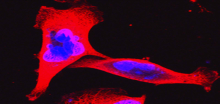
Understanding the physiological and functional characteristics of cancer cells at the individual level, and the tumor tissue as a highly orchestrated multicellular formation, by whose activity the tumor expands, invades and disseminates, is the main goal of cancer biology research today. Defining the causes of abnormal behavior of neoplastic cells individually and in the context of the tumor microenvironment, including the histological, metabolic and immunological specificities of this tissue, represents a platform for designing new approaches in cancer treatment. Investigating the phenomenon of initial or acquired tumor resistance helps to gain deeper insights into the reasons for limited effects of the conventional treatments, enabling the improvement of existing protocols.
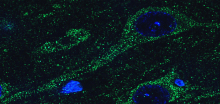
Neurobiology studies the anatomy, physiology, and pathology of the nervous system. From the molecular and biochemical basis of this system, to the study of behavioral plasticity, to understanding the driving forces of neurodegenerative diseases and how they can be treated. Electrophysiology studies biophysical properties in vertebrate neurons and links morphofunctional features of the brain to observed animal behavior. The ultimate goal is to identify active substances that may have a protective effect in neurological and psychiatric diseases.
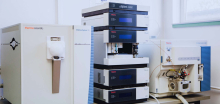
Natural products are complex chemical compounds synthesised by living organisms through biochemical processes, with a specific physiological or ecological function. Researchers at the Institute study the chemical characterization and isolation of natural products, metabolic engineering, as well as the assessment of the possibility of their application in industry (as medicaments, dietary supplements and functional food, biopesticides).

Dunja Dimitrijević was born on September 29, 1999 in Čačak. She finished Еlementary school and High school in Ivanjica. She enrolled in Bachelor academic studies at the Faculty of Biology, University of Belgrade in 2018 on the Molecular Biology and Physiology module and completed it in 2022. In the same year, she enrolled in the Master's academic studies in the Neurobiology module and completed them in 2023 by defending his Master's thesis prepared in the Neurobiology Laboratory of the Department of General Physiology and Biophysics, Faculty of Biology entitled "The effects of repeated antenatal dexamethasone treatment on the ADP-dependent and adenosine signaling system in the auditory brain stem of C57BL/6 mice during development". In the same year, she enrolled in Doctoral academic studies at the Faculty of Biology in the module "Translational research in neurobiology and biomedicine", while she is doing the experimental part of her doctoral dissertation at the Institute for Biological Research "Siniša Stanković". in the Neurochemistry Laboratory of the Department of Neurobiology. At the same institute, she is elected in her first title "Trainee researcher’’ on October 31, 2023.
Understanding the physiological and functional characteristics of cancer cells at the individual level, and the tumor tissue as a highly orchestrated multicellular formation, by whose activity the tumor expands, invades and disseminates, is the main goal of cancer biology research today. Defining the causes of abnormal behavior of neoplastic cells individually and in the context of the tumor microenvironment, including the histological, metabolic and immunological specificities of this tissue, represents a platform for designing new approaches in cancer treatment. Investigating the phenomenon of initial or acquired tumor resistance helps to gain deeper insights into the reasons for limited effects of the conventional treatments, enabling the improvement of existing protocols.
Neurobiology studies the anatomy, physiology, and pathology of the nervous system. From the molecular and biochemical basis of this system, to the study of behavioral plasticity, to understanding the driving forces of neurodegenerative diseases and how they can be treated. Electrophysiology studies biophysical properties in vertebrate neurons and links morphofunctional features of the brain to observed animal behavior. The ultimate goal is to identify active substances that may have a protective effect in neurological and psychiatric diseases.
Natural products are complex chemical compounds synthesised by living organisms through biochemical processes, with a specific physiological or ecological function. Researchers at the Institute study the chemical characterization and isolation of natural products, metabolic engineering, as well as the assessment of the possibility of their application in industry (as medicaments, dietary supplements and functional food, biopesticides).

Understanding the physiological and functional characteristics of cancer cells at the individual level, and the tumor tissue as a highly orchestrated multicellular formation, by whose activity the tumor expands, invades and disseminates, is the main goal of cancer biology research today. Defining the causes of abnormal behavior of neoplastic cells individually and in the context of the tumor microenvironment, including the histological, metabolic and immunological specificities of this tissue, represents a platform for designing new approaches in cancer treatment. Investigating the phenomenon of initial or acquired tumor resistance helps to gain deeper insights into the reasons for limited effects of the conventional treatments, enabling the improvement of existing protocols.
Neurobiology studies the anatomy, physiology, and pathology of the nervous system. From the molecular and biochemical basis of this system, to the study of behavioral plasticity, to understanding the driving forces of neurodegenerative diseases and how they can be treated. Electrophysiology studies biophysical properties in vertebrate neurons and links morphofunctional features of the brain to observed animal behavior. The ultimate goal is to identify active substances that may have a protective effect in neurological and psychiatric diseases.
Natural products are complex chemical compounds synthesised by living organisms through biochemical processes, with a specific physiological or ecological function. Researchers at the Institute study the chemical characterization and isolation of natural products, metabolic engineering, as well as the assessment of the possibility of their application in industry (as medicaments, dietary supplements and functional food, biopesticides).
Phone: +381 11 20 78 300
Fax: +381 11 27 61 433
Email: ibiss@ibiss.bg.ac.rs
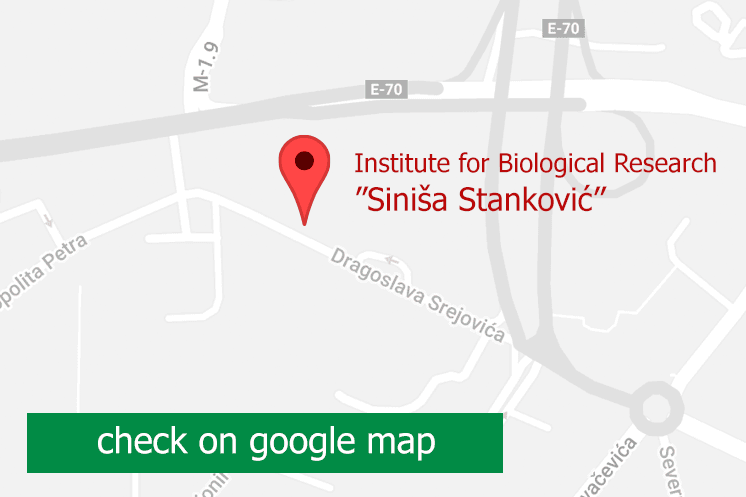
Bulevar despota Stefana 142
11108 Belgrade
Serbia


IBISS uses analytical cookies to analyze the use of the site in order to improve the user experience, by clicking "Accept" you consent to the use of cookies.