


Funder: European Commission
Project leaders:
Prof. Tuulia Hyötyläinen, School of Science and Technology, Örebro University, Sweden
Dr. Nataša Veličković, project coordinator from IBISS, Department of Biochemistry, IBISS
Period: 2025-2028.
Team members from IBISS:
Dr. Ana Đorđević, Department of Biochemistry, IBISS
Dr. Danijela Vojnović-Milutinović, Department of Biochemistry, IBISS
Dr. Ana Teofilović, Department of Biochemistry, IBISS
Dr. Biljana Bursać, Department of Biochemistry, IBISS
Dr. Sanja Kovačević, Department of Biochemistry, IBISS
Dr. Miloš Vratarić, Department of Biochemistry, IBISS
Vasilije Živaljević, Odeljenje za biohemiju, IBISS
Dr. Jasmina Živanović, Department of Cytology, IBISS
Dr. Marko Miler, Department of Cytology, IBISS
Dr. Ivana Stojanović, Department of Immunology, IBISS
Dr Nataša Radulović, Department of Immunology, IBISS
Dr. Ivan Koprivica, Department of Immunology, IBISS
Natalija Jonić, Department of Immunology, IBISS
The EDC-MASLD project is a consortium of 15 partners from 10 countries, including IBISS, which joined the project on March 1, 2025, through the Hop-on facility mechanism.
The EDC-MASLD project investigates the impact of endocrine-disrupting chemicals (EDCs) on the human exposome – including the metabolome, gut microbiome, epigenome, proteome, and immune system – and their contribution to liver damage in metabolic fatty liver disease (MASLD). Focusing on MASLD progression, the project will analyze the interaction between EDC exposure and factors such as gender, genotype, diet, and socioeconomic status. The project will use data from the European Registry of Non-Alcoholic Fatty Liver Disease (NAFLD), as well as mouse models, zebrafish, and in vitro studies, to investigate underlying mechanisms and develop new tools for EDC screening.
The IBISS team, within an independent task in WP5, is responsible for investigating the impact of perinatal EDC exposure on hormonal signaling regulated by sex steroids and glucocorticoids in offspring, and whether modulation by EDCs leads to gender specificity in the development and progression of MASLD. The main goal of the IBISS team is to identify new molecular targets and potential treatments tailored to MASLD therapy by gender, thereby reducing obesity and MASLD in the Serbian population (in Serbia, over 65% of people are overweight) and raising awareness of the health risks from EDC exposure.
Phone: +381 11 20 78 300
Fax: +381 11 27 61 433
Email: ibiss@ibiss.bg.ac.rs
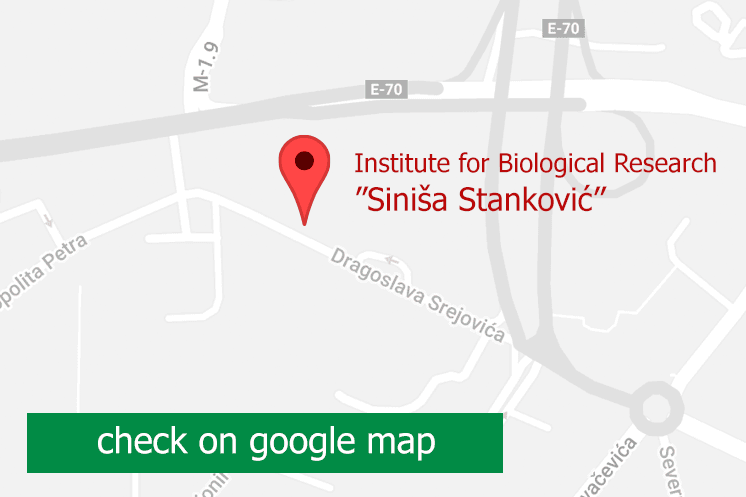
Bulevar despota Stefana 142
11108 Belgrade
Serbia


IBISS uses analytical cookies to analyze the use of the site in order to improve the user experience, by clicking "Accept" you consent to the use of cookies.